
Water Damage at Home? Smart Ways to Clean Up and Recover
Water damage has a way of turning an ordinary day into a stressful one. Maybe a washing machine hose suddenly bursts, a pipe starts leaking behind the kitchen sink, or heavy rain finds its way inside through a damaged roof. Whatever the cause, even a small amount of unwanted water can create a surprisingly big mess. Wet carpets, damp walls, unpleasant smells, and damaged furniture are just a few things homeowners might face. The good news is that a quick and sensible response can make a real difference. Knowing what to do, what to avoid, and when to get extra help can save both time and money. If you ever find yourself dealing with a flooded room, a little preparation and the right approach can help you get things back under control.
Start With Safety Before Cleaning Anything
When water enters your home, cleaning should not be your first priority. Safety always comes first, especially when water spreads near electrical outlets, appliances, or extension cords. If you suspect an electrical risk, stay out of the affected area and arrange for a qualified electrician to check things before you enter. You should also look for possible hazards such as broken glass, loose flooring, or contaminated water from drains and sewage.
Once the area feels safe, try to identify where the water comes from. Turn off the main water supply if a burst pipe or plumbing problem causes the flooding. If rainwater enters through a roof or window, focus on limiting further water entry without putting yourself at risk. These early steps may seem simple, but they help prevent an already difficult situation from becoming even worse.
Remove Standing Water as Quickly as Possible
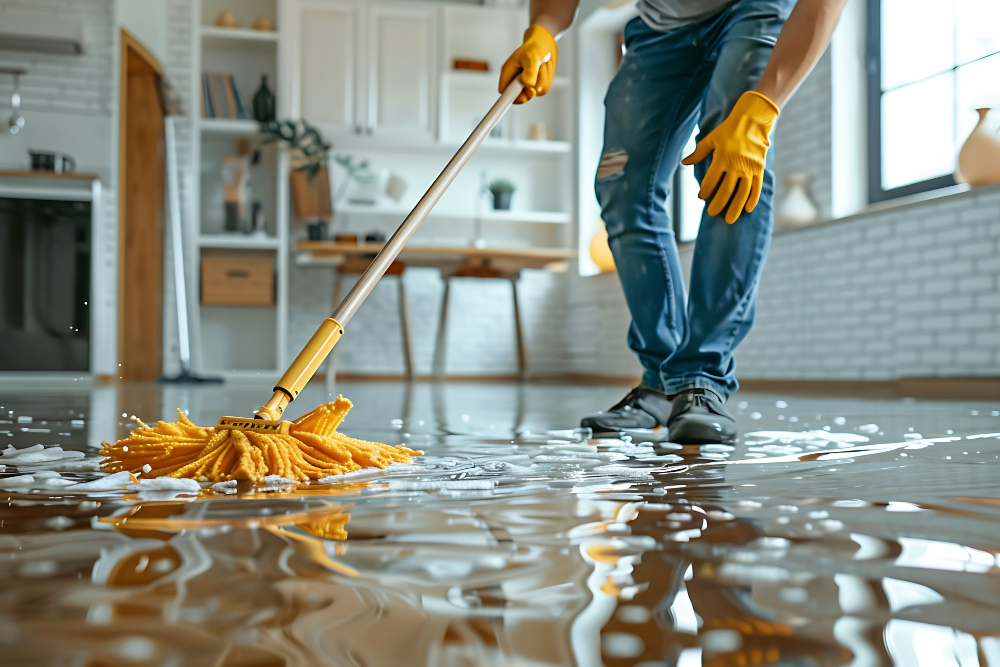
Standing water can damage floors, carpets, furniture, and personal belongings much faster than many people realise. The longer it stays inside, the deeper it can travel into materials and hidden spaces. For a small spill, towels, buckets, and a wet vacuum designed for water removal may help. However, larger floods usually need more powerful equipment and a careful drying process.
Start by moving lightweight furniture and valuable belongings away from wet areas. Place aluminium foil or suitable waterproof blocks under furniture legs if you cannot move larger items straight away. This can help prevent wood stains from transferring onto wet carpets. Avoid dragging heavy furniture across soaked flooring because it can cause further damage. When dealing with larger amounts of water, professional extraction equipment can remove moisture much more effectively than ordinary household cleaning tools.
Give Wet Carpets and Underlay Extra Attention
Carpets often make water damage more complicated because they can hold moisture long after the visible surface starts to look dry. Water can travel through the carpet fibres and settle into the underlay underneath. In some cases, moisture can also reach concrete or wooden floorboards, creating problems that remain hidden from view.
This is why simply opening a window or placing a fan near a wet carpet may not solve everything. Depending on the amount and type of water involved, the carpet may need lifting so the underlay and flooring can dry properly. Anyone searching for water damage cleanup Christchurch should understand that proper recovery involves much more than removing the water they can see. Professional equipment such as commercial air movers, dehumidifiers, and moisture testing tools can help remove trapped moisture and check whether the affected materials have dried sufficiently.
Do Not Ignore the Risk of Mould
One of the biggest concerns after flooding is mould growth. Damp environments give mould a chance to develop, particularly in places with poor ventilation or limited sunlight. You might notice a musty smell, dark patches around skirting boards, or small marks appearing on walls and ceilings. Sometimes, however, moisture remains hidden behind furniture, inside cupboards, or underneath flooring.
The best way to reduce this risk is to start drying the property as soon as conditions allow. Open windows when outdoor weather permits, create airflow, and use dehumidifiers where appropriate. Keep checking corners, wardrobes, carpet edges, and other places where moisture can collect. Do not assume a room has dried completely just because the carpet feels dry under your feet. If you notice mould or suspect hidden moisture, arrange a proper inspection rather than covering the affected area with paint or household fragrance products.
Look After Furniture and Personal Belongings
Flooding does not only affect the structure of a home. It can also damage furniture, clothing, books, photographs, and other belongings that hold personal value. Acting quickly gives you a better chance of saving some of these items. Move dry belongings away from the affected room and separate wet items so they do not transfer moisture to everything around them.
For furniture, gently wipe away surface water and allow suitable items to dry in a well ventilated space. Avoid placing delicate wooden furniture directly in strong sunlight or near heaters because sudden temperature changes can cause cracking or warping. Wash washable clothing and fabrics according to their care labels. If important documents or photographs get wet, handle them carefully and consider specialist restoration advice before trying aggressive cleaning methods.
Remember that items exposed to sewage or contaminated floodwater need extra care. Do not try to save everything at the expense of your health. Some porous materials may require disposal if contamination makes safe cleaning impossible.
Keep a Record of the Damage
Another useful step that homeowners sometimes forget is documenting everything. Before moving too many belongings or starting major cleaning work, take clear photographs and videos of the affected rooms. Capture wet carpets, damaged furniture, water marks, and any visible problems with walls or flooring. Make a simple list of damaged items, including approximate purchase dates and values where possible.
If you have home insurance, contact your insurer and ask about the next steps. Different policies cover different types of water damage, so it helps to understand what your policy includes. Keep receipts for emergency supplies, temporary repairs, and any professional services you arrange. Good records can make insurance discussions much easier and help you explain exactly what happened.
Know When Professional Help Makes Sense
Some water problems are manageable with basic household tools, but others need specialist attention. A small spill on a tiled kitchen floor is very different from a flooded lounge with soaked carpets and moisture trapped underneath. Large leaks, contaminated water, recurring dampness, and flooding that affects multiple rooms all deserve a more careful approach.
Professional restoration teams use water extraction systems, commercial dryers, air movers, and dehumidifiers to deal with moisture at different stages. They can also monitor moisture levels to help determine when carpets and underlying surfaces have dried properly. This matters because rushing to put carpets back in place before the floor underneath dries can create further problems. Getting the right help early can prevent a manageable repair from turning into a much bigger project.
A Little Preparation Can Make a Big Difference
Nobody plans for water damage, but a few simple habits can make your home less vulnerable. Check washing machine hoses, inspect visible plumbing connections, clean gutters regularly, and look for signs of roof leaks after heavy rain. Knowing where your main water shut-off valve sits can also save valuable time during an emergency.
Most importantly, do not panic if something goes wrong. Focus on safety, stop the source of the water when possible, protect your belongings, and begin the drying process without unnecessary delays. Some damage may take time to repair, but a calm and organised response gives you a much better starting point. Your home deserves proper care, and taking the right steps today can help make tomorrow feel a whole lot easier.



Leave a Reply