
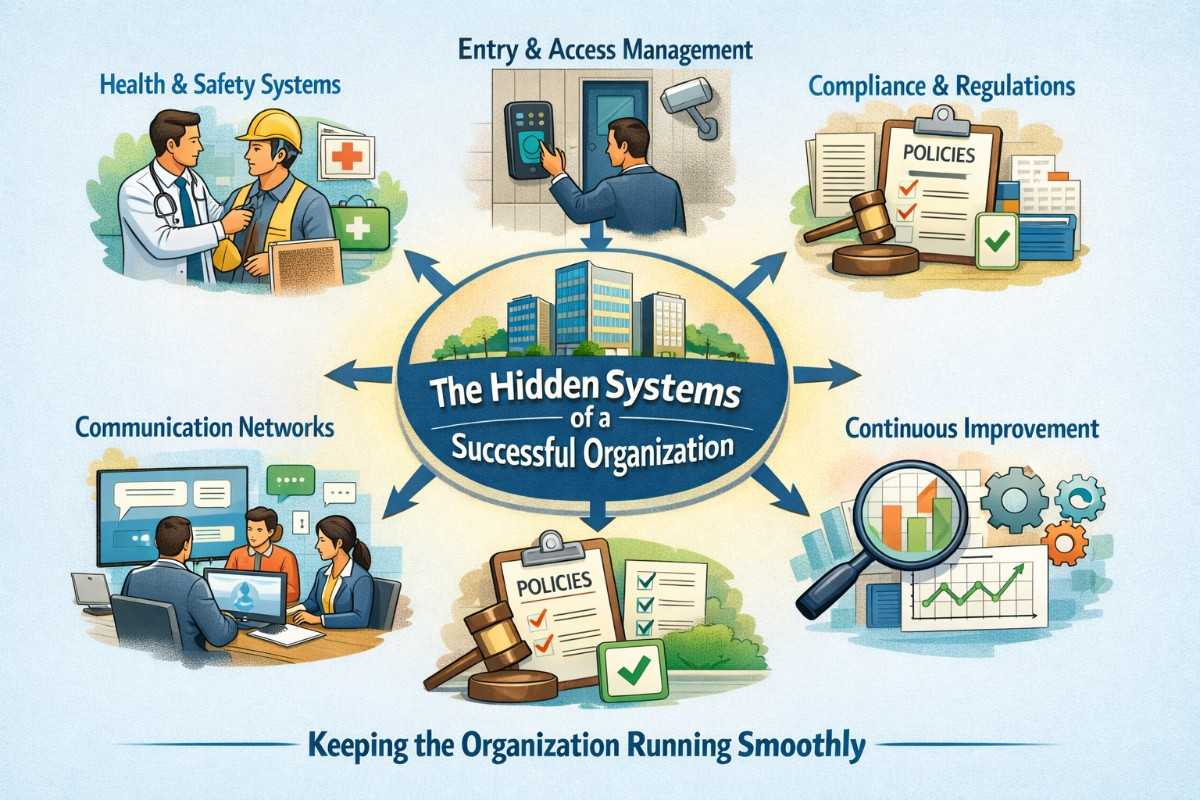
The Hidden Systems That Keep Large Organizations Running Smoothly
When it comes to running a successful organization, people generally look for great leadership, qualified employees, innovative products, employee productivity, and a unique office culture. Yes, indeed, these factors play a vital role, but they are only a part of the whole story.
Behind a good organization, there lie some invisible systems that work quietly in the background. They ensure smooth business operations, productivity, and a positive work environment. These systems do not work loudly, but silently help to keep the organization running efficiently. Let’s explore them!
Invisible Workplace Processes Behind A Successful Organization
Health and Safety Systems
An essential yet overlooked element that supports smooth operations is the health management of a workplace. Every workplace should keep in mind that the health of the employees is not just a personal matter nowadays. It has become an operational priority.
Do you know that many companies access occupational medicine in Florida through specialized clinics? Yes! With this approach, companies can ensure that employees remain fit, safe, and can work effectively. It helps to manage health risks and support employees who perform physically demanding jobs.
Entry and Access Management
How people enter your building matters more than you think. Access control systems ensure that your employees are serious about their work. How? Some companies use biometric access control to create a seamless entry experience.
This means your employees can directly enter without thinking or getting stuck. Workplace security that creates conflict is bad for both safety and productivity. In addition, manual access can slow everything down, and you do not have any real-time information. With the smart entry system, you will be informed about everyone’s entry or departure.
Compliance and Regulatory Systems
Large organizations need to navigate a complex landscape of rules and regulations. It is really a time-consuming and complex task that you cannot perform alone.
To manage this complexity, many organizations rely on internal systems to monitor policies, track documentation, and meet requirements. This effective approach helps companies to stay informed about potential legal risks.
For example, the role of transportation, logistics, or public safety might require specific health clearances. In some sectors, this includes procedures like DOT physicals for federal employees in Florida. With this approach, an individual who is performing safety-sensitive duties can meet required health standards.
Communication Networks
In large companies, communication becomes complicated easily. Several teams work on interconnected projects at the same time. What if there are no effective communication systems? There is a higher chance of losing valuable information and creating misunderstandings. Successful organizations prefer structured communication channels. It might include internal platforms and scheduled reporting structures.
When information flows smoothly, teams can respond quickly and easily. Through this effective approach, companies can reach their goal smoothly and avoid costly misunderstandings.
Continuous Improvement Mechanisms
Even the best systems cannot remain consistent. That is why regular improvement checking is essential. How can you do this? There are many ways, such as:
- Regular evaluations
- Feedback
- Performance reviews
- Close Observation of Performance
It helps the leader to identify areas that need improvement. Even small adjustments can enhance work efficiency over time.
This culture of continuous improvement ensures that organizations stay adaptable. Instead of reacting to problems after they occur, they build systems that evolve alongside changing demands.
Create a Well-Managed Organization!
When an organization runs smoothly, it might look effortless from the outside. But behind that organized surface remains a complex network of systems to support every aspect of the operation. These systems actually hold everything together. They solve problems faster, reduce misunderstandings, and improve productivity. If you want to create such a workplace, follow the above-mentioned strategies.




Leave a Reply