
Why You Are Eating “Healthy” But Still Not Losing Fat: Here Is What Is Missing
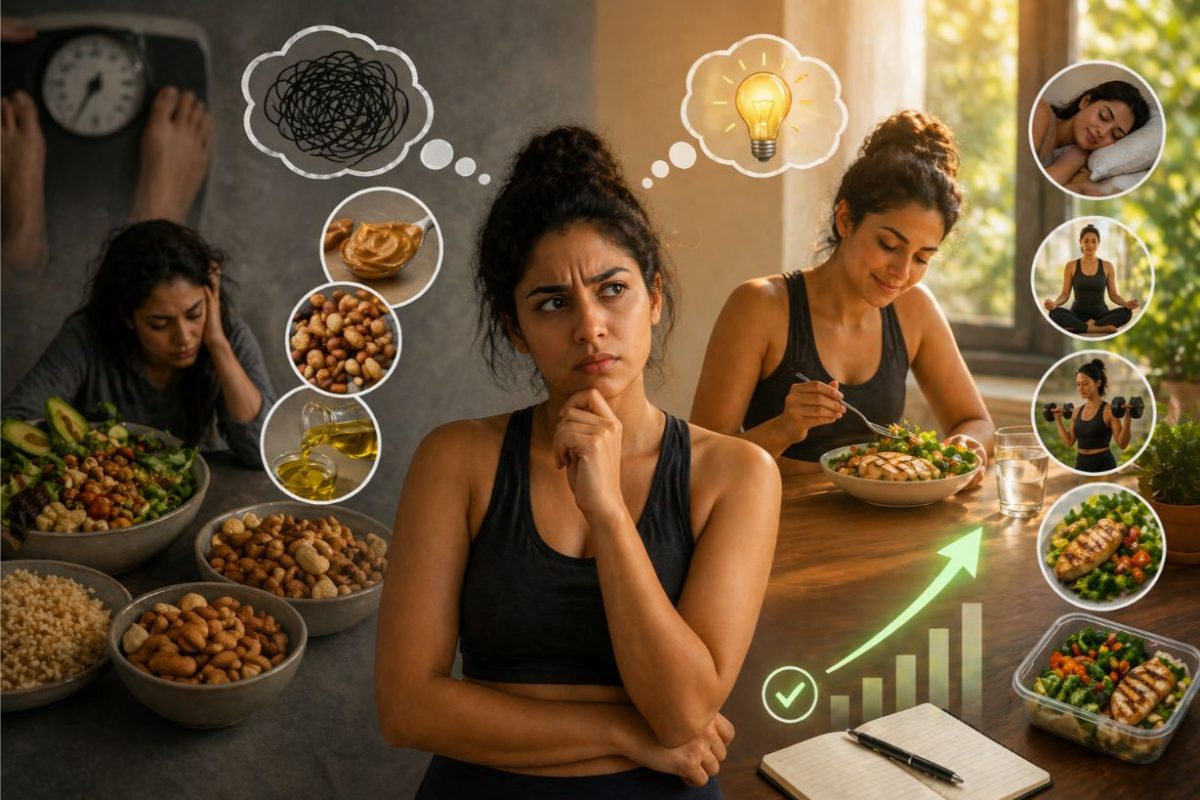
You switched to salads. You cut out soda. You stopped eating after 8 PM. You are doing everything the internet told you to do, and yet the scale has not moved in three weeks. Maybe it went up. That is frustrating in a way that is hard to explain to someone who has not lived it.
Here is the thing! You are probably not doing it wrong because you are lazy or undisciplined. You are doing it wrong because most of the advice floating around about fat loss is incomplete. There are gaps in the picture that nobody fills in for you, and those gaps are exactly where your progress is disappearing.
The Truth About Gaining Weight Even After Maintaining a Diet
Eating Healthy and Eating for Fat Loss Are Not the Same Thing
This is the part that trips up almost everyone. A food can be genuinely nutritious and still work against your fat loss goals, depending on how much of it you are eating.
Avocados are healthy. Almonds are healthy. Olive oil is healthy. Brown rice is healthy. But if you are eating large portions of all of them in the same day without any awareness of how much energy that adds up to, your body has no reason to burn stored fat. It is using what you are feeding it.
Fat loss at its most basic level requires your body to be in a caloric deficit. It means you are consuming slightly less energy than your body is burning. Healthy foods can absolutely push you over that line. The label on the food does not change the math.
You Are Probably Underestimating How Much You Eat
Nobody likes to hear this, but it is one of the most consistently documented findings in nutrition research. People underestimate their food intake. Not because they are dishonest, but because portion sizes are genuinely confusing. And a handful of this and a drizzle of that adds up faster than your brain tracks.
Two tablespoons of peanut butter are about 200 calories. A generous pour of olive oil over a salad can be another 150. That handful of mixed nuts you grabbed at 3 PM is closer to 300. None of these things is bad. But if you are not paying attention, your “clean eating” day might be significantly higher in calories than you realize.
Stress and Sleep Are Doing More Damage Than Your Diet
Here is where most people never look. You can eat perfectly and still stall your fat loss if your cortisol levels are chronically elevated from stress or poor sleep.
Cortisol is your body’s primary stress hormone, and it directly encourages fat storage, particularly around the midsection. It also drives cravings for high-calorie foods and disrupts the hunger hormones that tell you when you are actually full.
A person sleeping five hours a night and running on anxiety is fighting an uphill metabolic battle that no amount of kale can fully offset. If your sleep is broken or your stress is unmanaged, that is not a secondary concern. That is a central one.
Your Protein Intake Is Likely Too Low
Protein is the most underrated tool in fat loss. It keeps you full longer, it costs your body more energy to digest, and it preserves muscle mass while you are in a deficit. Muscle matters because muscle tissue burns more calories at rest than fat tissue does.
Most people eating “healthy” are filling their plates with vegetables and whole grains, which is great, but running low on protein. If you are not intentionally including a solid protein source at every meal, you are missing one of the most powerful levers available to you.
You Need a Strategy, Not Just Good Intentions
Good intentions get you started. A structured approach gets you results. This is the gap between people who see consistent fat loss and people who stay stuck despite genuine effort. Understanding your calorie needs, your protein targets, how your body responds to different foods, and how lifestyle factors like sleep and movement interact- that is not something most people figure out alone through trial and error.
This is exactly why working with professionals in fat loss coaching Birmingham has helped many people finally break through plateaus they had been stuck on for months. Not because they were given a magic plan, but because someone helped them see clearly what they were missing.
The Honest Takeaway
You are not broken. Your metabolism is not the enemy. The missing piece is almost always clarity. A clear picture of what is actually going in, what your body actually needs, and what invisible factors are quietly working against you.
Fix the picture. The results will follow.



Leave a Reply