
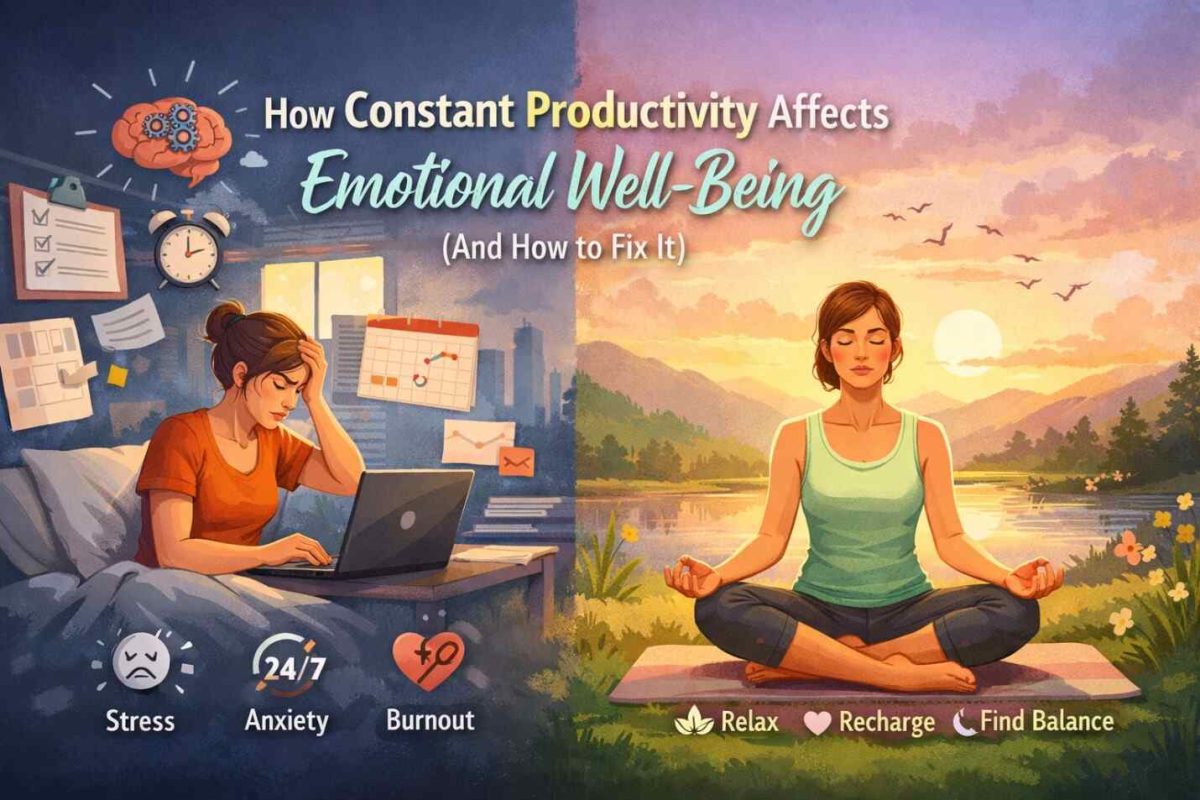
How Constant Productivity Affects Emotional Well-Being (And How to Fix It)
You wake up in the morning, open your eyes. But you are not feeling fresh or energetic, as your mind is already running. There is a list of work for you. Some tasks you need to finish as early as possible, some to improve, and some tasks you totally forgot to complete yesterday.
You tell yourself, “Let’s start”, “we have to perform better than yesterday.” But somewhere in between checking tasks and chasing deadlines, something feels off. It is not loud; it is just a quiet heaviness you carry around, even when everything looks on track.
Honestly, we don’t always notice when productivity stops helping and starts hurting. It happens slowly. But the good news is you can fix it by taking some smart steps. Let’s talk about them.
How Constant Productivity Shapes Your Emotional Health (And What You Can Do about It)
Creates a Habit of Measuring Yourself Every Day
You are constantly fulfilling your targets and doing everyday work. But you hardly notice that you start judging your days based on what gets done. A small delay now feels like failure. It builds this quiet pressure where rest starts feeling undeserved. This often leads to stress, anxiety, and even depression.
To break this, you have to shift how you measure your day. Instead of counting tasks or your speed, focus on your energy and mood. Allow some things to remain incomplete without guilt. Doing this may feel challenging. You can include private yoga classes in your daily routine to make some positive changes.
Allows Your Mind to Work 24 Hours a Day
Your body may stop, but your mind doesn’t. It keeps running through tasks, replaying conversations, and planning what is next. Over time, this constant mental activity drains you more than physical work ever can.
Try to create small pockets of pause in your day. Not long, not complicated. Just moments where you sit without input, without trying to solve anything. Gradually, your mind learns it doesn’t have to stay “on” all the time.
Keeps Your Emotions Aside
You begin treating emotions like interruptions. Stress gets pushed aside, frustration gets buried, and even joy gets postponed. You tell yourself you will deal with it later, but later rarely comes. Your emotions start accumulating, and you forget how to enjoy your day.
So, you start making space for it, even briefly. When something feels off, pause and acknowledge it instead of brushing past. You don’t need to fix everything instantly, but noticing it helps you reconnect with yourself again.
Makes You Feel Uncomfortable When You Slow Down
When you finally try to rest, it feels strange. Almost, like you are doing something wrong. You reach for distractions because stillness feels unfamiliar. This is how constant productivity affects your emotional well-being.
You may attend yoga workshops, not as another task to complete but as a way to experience slowing down without pressure. Over time, that discomfort fades, and stillness starts to feel less intimidating.
In the end, it is not about doing less or more. It is about noticing how constant productivity quietly shapes how you feel, think, and live. And once you see it, you can slowly begin to choose differently, without pressure or urgency, just one small shift at a time.



Leave a Reply