
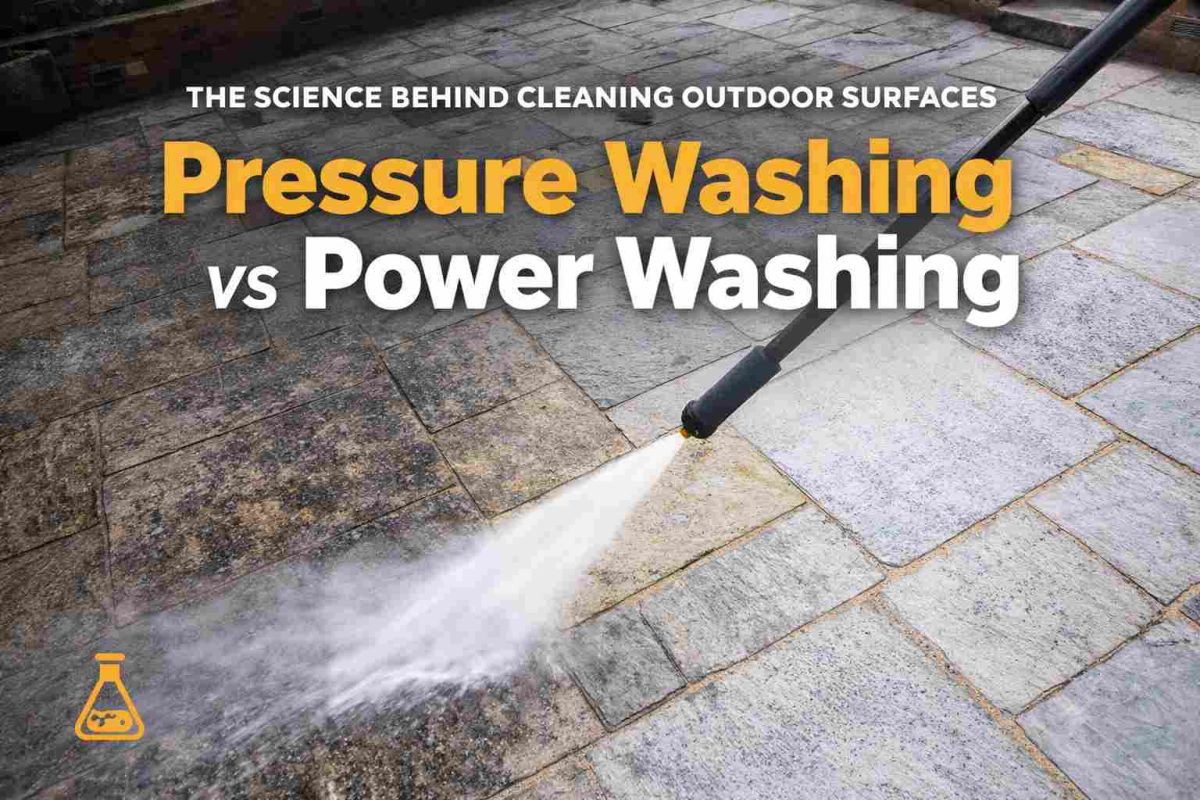
The Dirty Truth About Clean: The Real Science Behind Pressure vs Power Washing
You see it all the time. A driveway covered in dark stains. A patio turning green after a rainy season. Concrete that once looked fresh now feels tired and worn. It is easy to think dirt is just dirt. But what is really happening on those surfaces is more complex than most people realize. Outdoor cleaning is not just about blasting water. There is actual science behind it.
What Is Really Sitting on Your Concrete
Outdoor surfaces deal with more than dust. There is algae, mold, mildew, oil, tire residue, and pollution. Moisture settles into tiny pores in concrete. Organic growth spreads quietly. Oil seeps in and bonds with the surface. Over time, these layers build up and hold onto each other. That is why a simple rinse with a garden hose does almost nothing. Concrete may look solid, but it is porous. It absorbs. It traps. And once grime settles in, it needs the right method to break the bond.
How Pressure Washing Actually Works
Pressure washing relies on force. Water is pushed out at high velocity. The strength of the stream creates a mechanical reaction that lifts dirt from the surface. Think of it like a controlled impact. The energy from the water disrupts the grip between grime and concrete. For routine buildup, driveway pressure washing is often enough to clear away surface dirt, light algae, and loose debris. The power comes from velocity, not heat. It is direct and efficient. When used correctly, it cleans without damaging the surface. But too much pressure can scar concrete, so balance matters.
When Heat Changes the Game
Power washing adds one important element. Temperature. Heated water changes how certain substances respond. Oil and grease break down faster when exposed to heat. Organic growth loosens more easily. The science here is simple chemistry. Heat speeds up molecular movement, which weakens stubborn bonds. That is where driveway power washing becomes useful. When stains run deep or oil has settled into pores, hot water can penetrate and dissolve what cold water struggles to move. It is not just stronger. It is smarter for certain conditions.
Pressure vs Power Is Not About Better or Worse
Many people think one method is superior. That is not really the point. The difference is about what you are cleaning and how deeply it has settled. Light dirt and seasonal buildup respond well to pressure alone. Heavy grease and long term staining may need heat to break things apart. It is similar to washing dishes. Some messes rinse off easily. Others need warm water to cut through grease. Outdoor surfaces work the same way. The goal is not more force. The goal is the right approach.
Why This Matters More Than You Think
Clean concrete is not only about looks. Mold and algae can create slippery surfaces. Oil can weaken areas over time. Built up grime traps moisture, and moisture slowly wears down material. A surface that looks dull today can turn into cracks tomorrow if ignored long enough. Understanding the science behind cleaning helps you make better choices. It helps you see that outdoor care is not random. It is practical. It is preventative. And it protects the spaces you walk on every single day.
At the end of it all, it is not just about blasting away dirt. It is about knowing what you are dealing with and choosing the method that works with the surface, not against it. Clean is not just a look. It is a process grounded in simple science and smart decisions.





Leave a Reply