
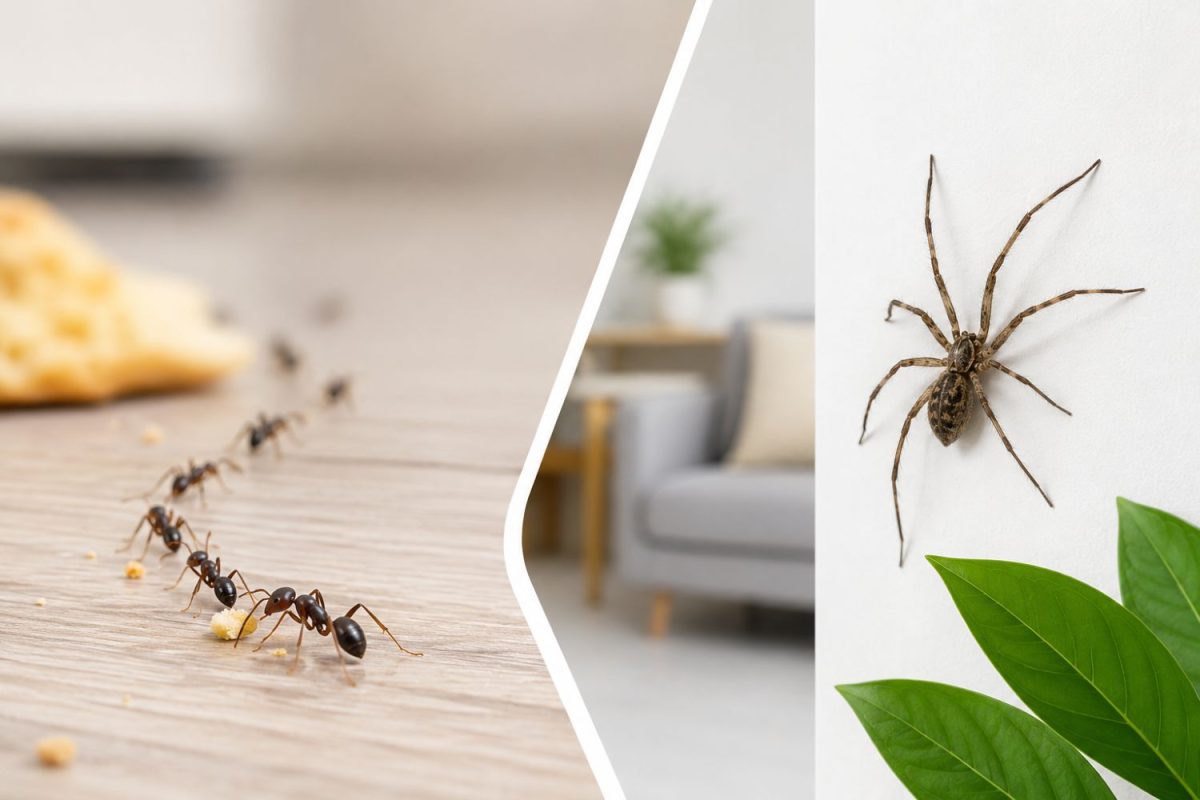
The Tiny Invaders Taking Over Australian Homes and How to Finally Stop Them
Nobody gives much thought to ants until there is a trail of them marching across the kitchen bench heading straight for the fruit bowl at 7am on a Tuesday. And nobody gives much thought to spiders until one the size of your hand drops from the bedroom curtain the night before you have people coming to stay. Both situations are enough to make even the calmest person scramble for a can of something from under the sink.
The trouble is that the can under the sink rarely solves anything. It deals with what you can see and leaves everything you cannot see completely untouched. And with both ants and spiders what you cannot see is almost always the bigger part of the problem.
Ants: Why You Keep Seeing Them No Matter What You Spray
Ant colonies are enormous. What you see trailing across your floor or bench is a tiny scouting party looking for food to bring back to the nest. The actual colony can contain hundreds of thousands of individuals living deep inside your wall cavities beneath the concrete slab or in the garden beds and soil around your home. Kill the scouts, and the colony just sends more. Spray the trail, and you disrupt the path for a day or two before they find a new route.
This is the fundamental reason why over-the-counter sprays frustrate so many homeowners. They are designed to kill what they contact, not to deal with the source. Professional ant control works differently. Licensed technicians use baiting systems and residual treatments that the worker ants pick up and carry back to the nest. The treatment travels to the colony instead of waiting for the colony to come to it. That is how you deal with an ant problem that actually stays dealt with.
Different species also respond to different treatments. Black garden ants, white-footed ants and coastal brown ants all behave differently and require different approaches. A professional identifies the species first, which means the treatment that gets applied is the right one for the actual problem.
Spiders: When Sharing Your Home Is Not Okay
Australia is home to more than 2000 species of spider, and a good number of them are completely harmless. But harmless does not mean welcome. And some of the species that commonly make their way inside Australian homes are far from harmless. Redback spiders, funnel-web spiders and white-tail spiders all present real risks, especially to young children and anyone with a compromised immune system.
Even the less dangerous species become a genuine problem when they are nesting inside your home regularly. Huntsman spiders may be beneficial in the garden, but inside your bedroom or bathroom they are not something most families want to live with. And spider activity tends to increase significantly in the warmer months when they are more active and searching for cool dry spaces inside.
Professional spider control focuses on creating a protective barrier around and inside your home that dramatically reduces spider activity for an extended period. Treatment is applied around the perimeter entry points, roof cool,s and internal areas where spiders are known to nest and hunt. A professional treatment holds up far longer than anything available off the shelf.
Getting Ahead of the Season
The best time to deal with ants and spiders is before activity peaks. A late winter or early spring treatment sets your home up well before the warmer months when both become noticeably more active. Homeowners who treat preventively almost always spend less than those who wait until there is a visible infestation to deal with.
If you have had treatments done in the past and the same problems keep coming back, it is worth having a professional reassess the entry points and nesting areas. Sometimes the issue is not the treatment itself but that the access points have never been properly identified and addressed. A thorough professional visit covers both.



Leave a Reply